

Soaked & Dehydrated Raw Almonds
Soaking almonds removes anti-nutrients, like phytic acid, and activates the enzymes that make them more digestible. Dehydrating them makes them crunchy and delicious, so you will enjoy them just as much as roasted almonds!

Affiliate Disclosure: This post may contain affiliate links. As an Amazon Associate, I earn from qualifying purchases at no additional cost to you. I only recommend books, products, and resources that I genuinely use, trust, or believe will be helpful. For more information, see my full affiliate disclosure here.
Why Soak Almonds
Almonds, like all nuts, contain enzyme inhibitors that prevent them from sprouting in dry conditions.
Phytic acid is an enzyme inhibitor that is present in beans, seeds, nuts, and grains, especially in the outer hull.
This enzyme inhibitor makes it so that the minerals – especially calcium, copper, iron, magnesium, and zinc – in these foods are not bioavailable to us.
Phytic acid will also bind to the minerals in your body, making them unavailable for the body to use. Thus, it’s considered an “anti-nutrient”.
Soaking nuts neutralizes phytic acid, making them easier to digest, and those nutrients available for us to use.
If you think of nuts as seeds (they will grow a nut tree in the right conditions), then it only makes sense that they need moisture in order to germinate. Without moisture, all those enzymes stay locked up.
This is a survival mechanism for nut trees – it allows the nuts (seeds) to stay preserved until the conditions are right for them to germinate.
This germination process is what we are trying to replicate in our kitchen.
Soaking your nuts tricks them into thinking they are in the right conditions to germinate – and thus, the enzymes will be activated, and the nutrients will be available to you.
Make Sure Your Nuts are Raw
This might go without saying, but make sure your nuts are raw.
Most conventionally-sold almonds are roasted. The enzymes in these nuts will already be killed, so soaking them won’t do anything.
Organic almonds would be preferable, but if you can only find (or afford) conventional, don’t worry too much about it.
How Long to Soak Almonds
Almonds should be soaked for 8-12 hours. Any less, and you likely won’t activate the enzymes. Any more and they might turn mushy.
I like to soak mine overnight, so they are ready to dehydrate in the morning.
How Much Water for Soaking Almonds
You want to use twice as much water as you have almonds. For example, if you are soaking 2 cups of almonds, use 4 cups of water.
The almonds will expand when they’re soaked, and you don’t want them to absorb all of the water.
I recommend using filtered water, to avoid adding chlorine or other contaminants to your soaked nuts. I use my Berkey Water Filter.
Dehydrating Almonds
While you can eat your soaked nuts without dehydrating them, dehydrated nuts will last longer, and will be crispier!
When dehydrating your almonds, make sure the temperature is set to 150 degrees or less. Anything higher than that, and you will be killing the enzymes, which defeats the purpose of soaking!
If you don’t have a dehydrator and must use your oven, make sure your lowest oven temperature is 150 degrees or less.
How to Use Dehydrated Almonds
Soaked, dehydrated almonds can be eaten and enjoyed just as you would with roasted almonds. You can also use them to make almond butter, almond flour, almond milk, or energy balls. (If you’re making almond milk, you can skip the dehydrating step, and just use them after soaking).
How to Soak and Dehydrate Almonds

Equipment
- bowl or large jar
- tea towel
- dehydrator
Ingredients
- 4 cups filtered water
- 2 cups raw almonds
- Juice of 1/2 a lemon
Instructions

Step 1: Rinse almonds in a mesh strainer or colander.

Step 2: Place rinsed almonds in a medium-sized bowl.

Step 3: Cover the almonds with filtered water – using about twice as much water as you have almonds.

Step 4: Juice half of a lemon.

Step 5: Add lemon juice to bowl.
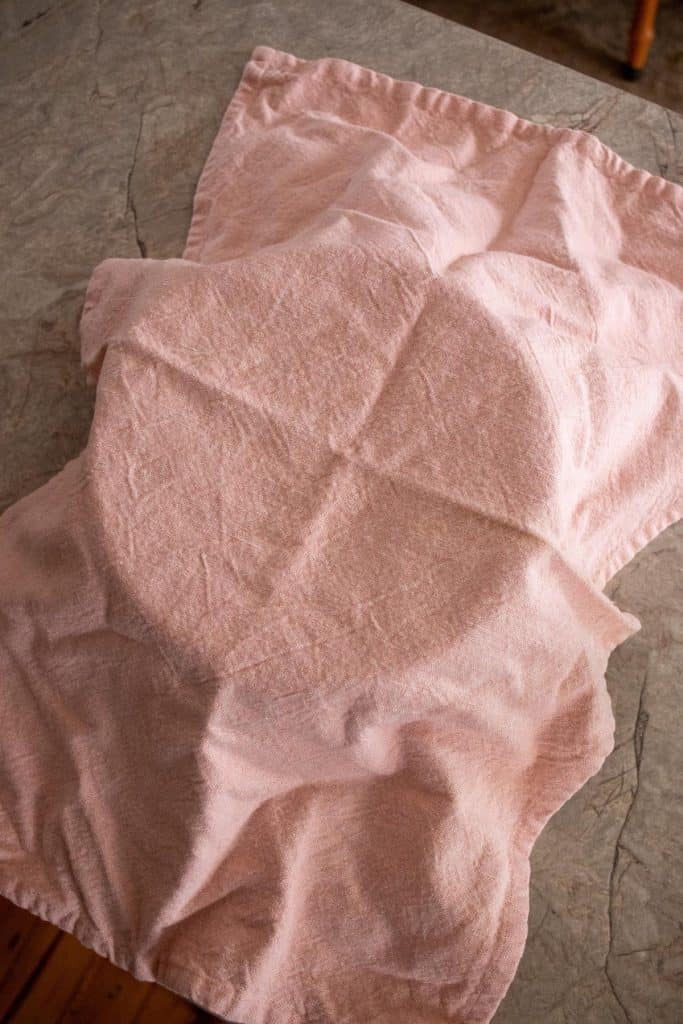
Step 6: Cover bowl with a tea towel, and let the almonds soak 8-12 hours, or overnight.

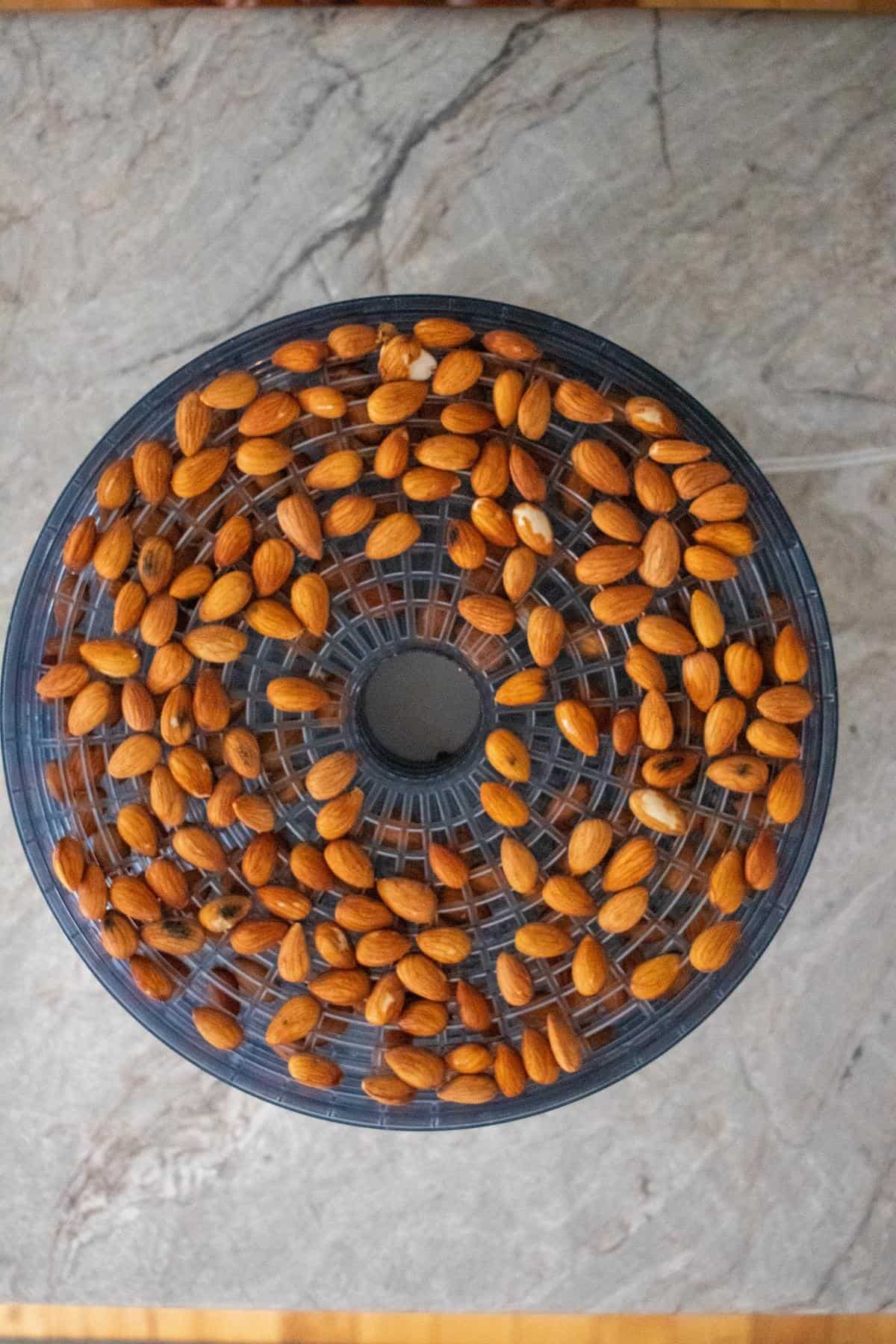
Step 7: In the morning, drain and rinse your almonds, and spread them out in a single layer on dehydrator trays (I used 2 trays for 2 cups of almonds).

Step 8: Dehydrate until crispy – approximately 12-24 hours, depending on your dehydrator. Let cool, and transfer to a glass jar for storage. Refrigerate for long-term storage.
Salt is an inorganic compound, and is not an ideal food for humans. In this recipe, I’ve used lemon juice as a replacement for salt.
If stored in an airtight container, soaked, dehydrated nuts will last several weeks or months in the pantry. In the refrigerator, they will be fine for up to a year. To store for more than a year, you will want to keep them in the freezer.
Raw almonds are actually pretty easy to find! You can get them at Costco, at your local grocery store, or even at your local bulk foods store, if you have one. They are sometimes called “natural” almonds.
Almonds are delicious, but addictive! They are high in fat and calories, so while they are good for us, you won’t want to eat a whole jar of them! 1/4 to 1/3 of a cup is the recommended daily serving size for nuts. This recipe uses 1/4 cup as a serving size.

Soaked & Dehydrated Almonds
Ingredients
Equipment
Method
- Place almonds in colander or sieve, and rinse well
- Place rinsed almonds in a medium-sized bowl
- Cover the almonds with water in a 1:2 ratio
- Juice half of a lemon and add the juice to the bowl
- Cover bowl with a tea towel, and allow to soak overnight (8-12 hours)
- Drain & rinse the almonds
- Spread almonds out on a dehydrator
- Dehydrate for 12-24 hours, or until almonds are completely dry and crisp
- Let the almonds cool, then transfer them to a jar with an airtight lid for storage
Nutrition
Notes
- Make sure your almonds are raw
- Organic almonds are preferred but not required